 Read Paul Mason’s article for a fascinating insight to the nature of leftist politics and social movements in Greece:
http://www.theguardian.com/world/2015/jun/29/greece-chaos-syriza-gamble-banks-closed-referendum
Read Paul Mason’s article for a fascinating insight to the nature of leftist politics and social movements in Greece:
http://www.theguardian.com/world/2015/jun/29/greece-chaos-syriza-gamble-banks-closed-referendum


Las Cuencas como Laboratorios de Gobernanza
Autoorganización e interdependencias
11 al 26 de julio 2014
Alejandro Meitin, Silvina Babich (Ala Plástica), Brian Holmes, Sara Lewison (Grupo Compass), Graciela Carnevale (El Levante), Steve Kurtz, Lucia Sommer, Steve Barnes Melissa Meschler (Critical art Ensamble), Joan Vila Puig (Sitezise), Eduardo Molinari (Plataforma La Dársena), Fabiano Kueva (Centro Experimental Oido Salvaje), Mauricio Corbalán y Pio Torroja (m7red).
Artistas nacionales e internacionales que trabajan en prácticas territoriales en América y Europa desarrollarán una investigación que tomará la forma de acciones urbanas nómadas y diálogos relacionados con las comunidades del frente fluvial en la franja costera del Río Paraná y del Río de la Plata; una aglomeración urbana,
industrial y agrícola que incluye al macro-sistema de humedales del delta paranaense, al estuario del Río de la Plata y a las ciudades de La Plata, Buenos Aires y Rosario. En este proyecto autogestionado por 3 nodos La Plata, Buenos Aires y Rosario y los 2 Sub-Nodos Delta y Victoria, el equipo compartirá sus experiencias con invitados y referentes locales de comunidades de base en sus propios escenarios complejos, para promover herramientas y acciones orientadas a desarrollar una nueva imaginación ambiental y geo-política partiendo de preguntas tales como ¿Quién diseña los territorios? ¿Para quién los diseña?, ¿Qué es el diseño de la integración territorial?, ¿Qué quiere decir ecología humana?, ¿Cómo incluirnos en el tejido ecológico en tanto seres humanos?,¿Qué ejercicios de imaginación política son necesarios para salirnos de las redes de monocultura y monocultivo? ¿Son la Pachamama y la Tierra sin Mal meras ensoñaciones? ¿Qué agenda política se oculta detrás del régimen de visibilidad en la actual gobernanza de la región?
Proyecto co-comisariado por Alejandro Meitin de Ala Plastica, Maurico Corbalán de M7red ambos integrantes de Nodo Sur del Ecuador Politico y Teddy Cruz del Centro para Ecologías Urbanas de la Universidad de California San Diego
Impulsan
Nodo La Plata
Productores Familiares del Delta Santiago, La Grieta, IHAAA-FBA-UNLP, Síntoma Curadores, Vivero Experimental El Albardón, Cooperativa de Productores de la Costa de Berisso, Cambio Rural – INTA
Nodo CABA
Museo Quinquela Martín, Programa de Artistas de la Universidad Di Tella, Centro Cultural de la Cooperación, Cooperativa Los Mimbreros
Nodo Rosario
Taller Ecologista, Programa de Agricultura Urbana, Taller de Comunicación Ambiental, Tallet Flotante, El Paraná No se Toca, Centro Cultural Parque España, Centro Ecologista Renacer, Red Delta del Paraná
Auspician
Alianza Sistema – http://www.alianzasistema.org/
Fondo Socioambiental Casa – http://www.casa.org.br/es
Haudenschild Garage – http://haudenschildgarage.com/

This year, the Canal is one hundred years old. It’s founding marked both Panamanian independence from Colombia, and the imperial turn of the United States. Today, the Canal is struggling once again to become the epicenter of the new global logistics revolution, based on the huge “post-panamax” container ships that no longer fit through the old locks designed by the US army engineers. The widening of the Canal – currently plagued by delays and cost overruns – is supposed to bring back profitability and ensure Panama its place at the center of global trade. But no one even seems to question the ecological consequences of so much “free” trade – whose costs are also measured in brutal inequality and the failure to even think about human development.

Presumably everyone knows I am a critic of capitalist excesses, and you’ll find more about that critique in upcoming posts. But I am also so terribly curious, so keen to see it all, to touch and feel it all – and it is almost impossible to describe the thrill of getting on that Panama Canal Authority tugboat, whose cabin and decks were opened to us by the good graces of Rafa Spalding, a former civil engineer and high-ranking Canal administrator. Thanks also to the warmth and openness of the crew, we were able to journey through the Miraflores and Pedro Miguel locks, across the Culebra Cut (where dynamite and steam shovels broke the continental divide) and all the way up to Gamboa where the man-made Lake Gatun starts to widen, opening a channel for the huge ocean-going ships. Here, humankind has exerted a truly tectonic force. By the end of the day, sunburnt and tired, we felt that much inside us had changed. Along the watery path that joins two oceans we experienced something a lot like continental drift.

January 4: Claire Pentecost and I arrive in Panama City. We are greeted at the airport by Ela Spalding, the founder of Estudio Nuboso, who became interested in Claire’s work at Documenta 13 in Kassel, Germany. Ela has lived in Berlin for six years and is now returning to Panama to launch a series of residencies having to do with biodiversity and the prospects for a more ecological way of living. Claire’s work with soil fits beautifully into this program. My work on contemporary capitalist development and logistics – fits in perfectly, because this is Panama, the original Zone, the last piece of the western hemisphere to emerge from the seas and the first to crack under the pressure of free trade, which literally split the continent. We are going to learn a tremendous amount here about the ground beneath our feet…

I looked out the window and saw an elegant old building dedicated to Panama Canal pilots. The question: How to steer humanity’s course through these early decades of the twenty-first century? Obviously there are immense problems. As we drove around Panama City, looking at the remains of the US Canal Zone along with the sprawl of neoliberal urbanism – and trying, pretty successfully, to catch the joyful wild Panamanian spirit through all that – our conversation returned again and again to the events of the last fifteen years, since the US military moved out in the late 1990s and the widening of the Canal was voted by referendum in the early 2000s. Panama gained full independence only to witness a giant real-estate boom in both the city and the countryside, and a huge speculative infrastructure boom around the Canal. Here, as everywhere, there is a deficit of perception, reflection, expression and action to make a more egalitarian and more ecologically sustainable world. Artists and thinkers should be able to contribute something to overcome that deficit, no?

On the first day in town we went to the Canal Museum and began to understand how important the isthmus has been to world trade since 1515, when Balboa “discovered” what the indigenous people had always known: the Pacific Ocean. Later that night we ate dinner with a fascinating group gathered around Ela’s parents, Rafa and Charlotte, who have tremendous insights into the way this place has developed over the last five or six decades. Talk flowed freely as we met many of those who will gather next week for the Suelo residency at SaLo Veraguas, on the southern side of the Isthmus, about five hour’s drive from here. Out there we won’t have electricity or Internet, but maybe it will increase the power of eyes and hearts and eras. We’ve got a lot to learn from the past, though none of us can be proud of all of it. We’ve got even more to learn from the future.
 Port of Illinois – Foreign Trade Zone (photo: R. Borcila)
El taller quiere abrir una reflexión cartográfica sobre cinco escalas de la experiencia: la intimidad, el territorio urbano, la nación, el continente y el mundo. ¿Cómo atrevesamos estas escalas? Y ¿cómo nos atrevesan? ¿Cómo sentir, analizar, representar y exprimir los espacios y tiempos de la globalización? Sobre todo, ¿cómo transformar este juego de escalas?
Cuatro días / cuatro pistas:
1. Cartografía cognitiva
Introducciones. Presentación del seminario movil “Deriva continental.” Lectura de un texto clásico: “El Posmodernismo como lógica cultural del capitalismo tardío,” por Frederic Jameson. Ejemplos de varias tentativas de cartografía artística. Lectura del texto “Cronopaisajes,” por Angela Melitopoulos y Maurizio Lazarrato; elementos visuales del proyecto Timescapes.
Diapositivas de ese día aquí.
2. Arte y infraestructura
Lectura del libro “Fish Story” de Allan Sekula. Comentarios sobre la pelicula: “The Forgotten Space.” Actualización de un concepto de Walter Benjamin: “la imagen dialéctica.” Primer acercamiento al sistema contemporaneo de los transportes globales.
3. Analisis y expresión
Lectura del texto “Investigaciones extradisciplinares,” por Brian Holmes. Discusión de las nociones de “disciplina” y de “profesión.” ¿Sobrepasar las disciplinas, o pasar a través de ellas? Ejemplos de arte extradisciplinar. La máquina compleja de la investigación colectiva.
4. Escala continental
Lectura del texto “Do Containers Dream of Electric People?” por Brian Holmes. Percepción y análisis de la circulación norteamericana. Ejemplo de Monterrey. Crisis y cambio al nivel continental.
El taller se ubica en el territorio urbano de Monterrey. Cada uno puede participar sobre la base de su experiencia de la ciudad y de las demás escalas. Cada uno puede señalar, mostrar, explicar otros ejemplos de investigaciones geográficas y artísticas pertinentes. En la medida de lo posible, vamos a organizar unas visitas a los sitios industriales y de transportes en Monterrey, para tocar de la mano a la infraestructura de la globalización.
****
Algunas lecturas suplementarias:
Brian Holmes, La personalidad flexible (una crítica de la cultura neoliberal en 2002)
Claire Pentecost, Notes on the Project Called Continental Drift (muy buen texto sobre Deriva continental)
Rozalinda Borcila, Riding the Zone (texto muy agudo sobre la logística y la vida indocumentada en EEUU)
Keller Easterling: Zone: The Spatial Softwares of Extrastatecraft (sobre las zonas de excepción en todo el mundo)

As a child I wanted to go into advertising. I had a love affair with the advertising industry. And this is why I am in a position to judge its merits. The anti-hierarchical structures and rhizomes of late capitalism are its successful ad campaign. Modern capitalism has to manifest itself as flexible and even eccentric. Everything is geared towards gripping the emotion of the consumer. Modern capitalism seeks to assure us that it operates according to the principles of free creativity, endless development and diversity. It glosses over its other side in order to hide the reality that millions of people are enslaved by an all-powerful and fantastically stable norm of production. We want to reveal this lie.
Letter from Nadezhda Tolokonnikova to Slavoj Žižek, read the rest here.
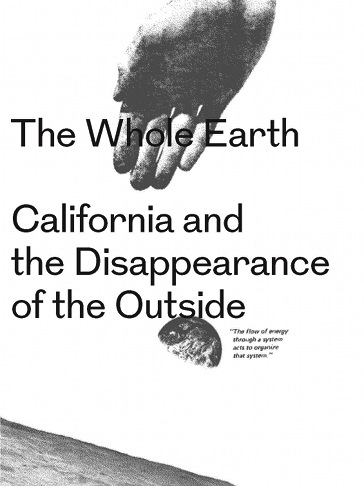
The world is big, the ocean is wide, and sometimes you hear of events you know you’ll miss and would like to have gone to some summer afternoon. Well, that’s how close I got to the Whole Earth exhibition at the Haus der Kulturen der Welt in Berlin. Fortunately it’s possible to catch the lectures, here. For the catalogue, just click on the image above.
A conversation about it arose on Nettime, particularly about Fred Turner’s book From Counterculture to Cyberculture: Stewart Brand, the Whole Earth Network, and the Rise of Digital Utopianism. I read the book when it came out, thought it was great and once met the author, whom I found worth listening to. However in the book and even more, in its reception, there is a kind of simplification or reduction of the counter-cultural moment, and therefore, of what cultural politics can achieve. This kind of reduction has become widespread and I think it is connected to a further misunderstanding of what’s at stake in some of the most important struggles of the technological societies, which are epistemological struggles, struggles over what counts as truth and the procedures used to get there. At the same time, there is also a reason for for this misunderstanding, and a good one: people are immensely disappointed by promises that did not deliver, or rather, by civilizational processes that delivered something else, under the cover of promises, attempts, questions, artworks, movements, revolts and so on. That’s what Turner’s book really shows, through the career of Stewart Brand in particular, and that’s why it’s so interesting. A decade ago I myself attempted to tease out that kind of reversal of promises, in The Flexible Personality; so I’m still attuned to the whole question.
In the Nettime thread, one participant caught my attention with a comment about how people in France “did not buy into the counterculture, prefering to stick to good old-fashioned agonistic politics.” It seemed like a good place to intervene:
…I lived a long time in France and engaged with collective struggles there, so I appreciate where you’re coming from. I also grew up in the Bay Area in the Seventies with the Whole Earth Catalogue in the house – in other words, thoroughly imbued with the Californian Ideology – and I think Fred Turner’s book is great, it’s full of fabulously precise and curious history about real people who are more commonly and less generously treated as myths. Yet in certain respects, his thesis is a bit too pat. As I recall it, his treatment of early counterculture/ cyberculture is reminiscent of something like Boltanski and Chiapello’s treatment of Deleuze & Guattari, or indeed, of “artistic critique” in general, in their book “The New Spirit of Capitalism.” In both of these otherwise impressive works, the authors write as though the worm of Neoliberalism were already in the Sixties’ fruit, and what we mistook for a sweet taste was actually a time-delay poison. Adam Curtis adopts a similar strategy in films like “The Trap”; and the list could go on. I think life is more complicated and more ambivalent than that.
Certainly in the US, the good old agonistic politics of the labor/capital confrontation was dead in the water after WWII, and in France – as Boltanski and Chiapello show so well – that kind of politics was institutionally paralyzed from the 1968 Grenelle accords onward, which used historic salary hikes to split union labor away from the student movement and literally buy its acquiescence to the subsequent processes of automation, flexibilization and outsourcing that are common to all the fully industrialized countries. The structuralization of right-left conflict, its neutralization within a far larger and more powerful system of bureaucratic management, was a reality of the postwar period whose consequences we can still observe around us. The good old days were not necessarily better. In fact, they were what so many people rebelled against.
Today it is often said that the quest for liberation, expressed in many different ways from third-worldism to psychedelia via second-order cybernetics, finally amounted to nothing more than the freedom theorized by Milton Friedman, the freedom to choose a product on a market, or maybe an identity-position in a surveilled and overcoded network. This is to argue at once too little, and too much. Too much, because such a judgment renders the challenges that the cyberneticians and counter-culturalists faced entirely unrecognizable: one can no longer see, for instance, how figures such as Bateson and Von Foerster, who had clearly been complicit with the power structure of the Second World War, strove in the Sixties and especially in the Seventies to render cybernetics, not just self-reflexive and meta-theoretical, but above all, strictly useless for the military, pointing either towards an ecological care for the planet (in Bateson’s case) or to an ethics of respect for the possibilities of the other (in Von Foerster’s). One could say even more compelling things about the Chilean cyberneticists, Maturana and Varela, whose notion of autopoiesis has everything to do with the effort to create an autonomous socialist project in a hemisphere dominated and overdetermined by the political-economic coercion of the United States. Deleuze and Guattari’s readings of the potentials for subversion lying within the very mainstream of what they call “royal science” are a reflection on exactly these threads of cybernetic history. The so-called “hippie” version of cybernetics springs from an intense epistemologial struggle over the uses of high-level technical, scientific and philosophical knowledge; and even if none of the cyberneticists was really a hippie, still it’s to the counter-culture’s credit that its participants recognized this struggle and tried to embody it in a more popular, daily-life sort of way.
But time passes, all that is far far behind us now, and what has actually been wrought by computerized capitalism is far more intense, detailed and terrifying than any simple caricature of Friedmanite neoliberalism – or Deleuzo-Guattarian nomadism, for that matter – can possibly convey. Tarring cybernetics with such brushes is too little. Sixties’ liberationism was everywhere based on an ontology of authentic experience and an openness to, or at least a yearning for, the encounter with the wholly other. That was the desire behind the fascination with “open systems.” In the present, twenty years after the invention of the World Wide Web, identity has been fractalized into the rival and strictly parcellary functions of hundreds of different companies and organizations, all using coded messages and screenic techniques to vie for some part of your attention, your energy, your money, your activity, your drives, your dreams – whose basic characterstics they have already captured by surveillance. The very idea of an “identity position” becomes quaint in this context. Post-modern schizophrenia and “self-shattering” is no longer the work of a “patient, immense and methodical derangement of all the senses” a la Rimbaud. Instead it is the calculated result of corporate strategies.
For Bateson, ecology was about “organism plus environment,” by which he meant the natural environment in all its multifarious interdependencies. For the hardliners of military cybernetics – true AI believers like Herbert Simon – it sufficed to create the proper environment in order to generate the organism of your choice, a theorem which is daily proven by human behavior in shopping malls, airports, social networks, war games and so-called creative cities. To be sure, for a real determinist there is ultimately no separation between the organism and the environment, so the former might have to be tweaked a little as well; and why not, if you have the power to do it? As Simon wrote in a telltale phrase, “If the inner system is properly designed, it will be adapted to the outer environment, so that its behavior will be determined in large part by the latter, exactly as in the case of ‘economic man.’” In that one little sentence, the cat comes out of the bag: we see that the great neoclassical subject of truck and bartering homo economicus has never been ‘natural’ in the Scottish-enlightenment sense of Adam Smith, but instead, always a cultural construct fitting into purpose-built markets. Twenty years on into massive immersion in capitalist networks, how far have we been redesigned? How well do we now adapt to the outer environments that are offered us, whether on the web, in urban spaces, in corporations, in universities, at borders or on battlefields?
In my own case, the lucid answer would be: far more than I would like. That said, I still agree with what Ted Byfield wrote not long ago on this list: “I don’t think it’s safe, wise, or shrewd to rely on nostalgic assumptions about the boundaries of the self.” The gender and culture-bending struggles for liberation, to which Ted alludes in that phrase, have left behind many valuable possibilities in the networks. Let’s use ’em for a new kinds of political resistance and political proposals in the present and for the future.
best, Brian
I’m no different from anybody else. I don’t have special skills. I’m just another guy who sits there day to day in the office, watches what’s happening and goes, ‘This is something that’s not our place to decide, the public needs to decide whether these programs and policies are right or wrong.’ And I’m willing to go on the record to defend the authenticity of them and say, ‘I didn’t change these, I didn’t modify the story. This is the truth; this is what’s happening. You should decide whether we need to be doing this.’
With these words, and throughout the above interview with The Guardian, Edward Snowden has taken a stand. He’s an average computer geek who never finished high school and learned his trade on the job, working for the US national intelligence agencies. Like thousands of other people within those agencies he was able to watch, day by day and in excruciating detail, the creation and development of immense surveillance capacities, operated by the US government against its own citizens and against hundreds of millions of innocent people around the world. Like so many others in his shoes, he worried about the possibilities of misuse that are latent in these massive surveillance capacities. He foresaw the day when they would be appropriated by political or military leadership at a moment of crisis, and used not against terrorists or enemies of democracy, but against political opponents, against principled critics and against other average individuals seeking to defend their constitutional rights. In advance of that moment, he did the real duty of citizens and persons of conscience. He made public the documents proving that the state, and specifically, the National Security Administration, is spying on me and you.
Until the current policy changes, my identity, the words I write here and the fact that you chose to read this page are known to the US government. If we are unable to change the surveillance policy of the United States, there is every chance that the simplest gestures of critical inquiry, both public and private, can and will be used against us. Facebook, Google, Microsoft, Apple, Amazon, Skype, PalTalk and undoubtedly all the other major providers of “cloud computing” services, as well as all the major US cell-phone companies, will be the witnesses of the prosecution.
Since the days of DARPA’s Total Information Awareness project, the existence of this global spying program has been widely suspected. Since the revelations by NSA whistleblower William Binney at the Hackers On Planet Earth conference in 2012, it was clear that a massive surveillance machine had in fact been built, and was being operated by the NSA and by defense corporations such as Booz Allen Hamilton. Now the open secret has become a public fact, thanks to the disclosure of classified information by a courageous individual. In his interview with Glen Greenwald – which in my view is among the most powerful ethical documents of this young century – Edward Snowden looks us all in the eye and asks, what are we going to do about this situation? As Americans in particular, can we live and enjoy the privileges of life in this society, while knowing that the price of those privileges is complete subjection to the state?
Bradley Manning could be demonized – or just discounted as a loser – because he was a queer guy on an obscure military base, aided and abetted by a notorious hacker organization, Wikileaks, which is called outlaw and criminal by the US State Department. Edward Snowden, on the other hand, is as close to the technocratic heart of the American government as anyone could get. Crucially, he is very close to its most fair, honorable and reasonable components. Clearly he respects Manning and Wikileaks, since he has chosen a similar path. Yet his address to the public is far more direct, since he has openly identified himself and assumed responsibility for his actions in advance. With his disclosures, critique has moved from the margins to the center. The US intelligence agencies are now involved in a dilemma as profound as that of the Cold War, when the proliferation of double agents began to undermine the trustworthiness of any intelligence whatsoever. Of course there is a decisive difference. The double agent of the Cold War was split between allegiance to two rival sovereigns. Today’s leaker is split between his or her allegiance to the Administration or the Constitution. Are we subjects or are we citizens?
Like Bradley Manning, Edward Snowden poses a monumental threat to the security of the United States surveillance establishment. It is the threat that we the people will act, not as the complicit agents of a dark and secretive power, but as the public bearers of universal human rights and responsibilities:
Anyone in the positions of access with the technical capabilities that I had could suck out secrets, pass them on the open market to Russia; they always have an open door as we do. I had access to the full rosters of everyone working at the NSA, the entire intelligence community, and undercover assets all over the world. The locations of every station, we have what their missions are and so forth. If I had just wanted to harm the US? You could shut down the surveillance system in an afternoon. But that’s not my intention. I think for anyone making that argument they need to think, if they were in my position and you live a privileged life, you’re living in Hawaii, in paradise, and making a ton of money, ‘What would it take you to leave everything behind?’
The greatest fear that I have regarding the outcome for America of these disclosures is that nothing will change. People will see in the media all of these disclosures. They’ll know the lengths that the government is going to grant themselves powers unilaterally to create greater control over American society and global society. But they won’t be willing to take the risks necessary to stand up and fight to change things to force their representatives to actually take a stand in their interests.
And the months ahead, the years ahead it’s only going to get worse until eventually there will be a time where policies will change because the only thing that restricts the activities of the surveillance state are policy. Even our agreements with other sovereign governments, we consider that to be a stipulation of policy rather then a stipulation of law. And because of that a new leader will be elected, they’ll find the switch, say that ‘Because of the crisis, because of the dangers we face in the world, some new and unpredicted threat, we need more authority, we need more power.’ And there will be nothing the people can do at that point to oppose it. And it will be turnkey tyranny.
We aren’t there yet. But we are at a turning point. There is now an historic chance to begin a broad-based movement against abusive government surveillance. This movement will build upon the sturdy foundations provided by thousands of people who have documented and denounced the construction of the global spy state. Its only chance is to construct a counter-power that redefines and reasserts democratic rights for the twenty-first century. As of this week, thanks to Edward Snowden and everyone who follows in his footsteps, that chance has ceased being a faint glimmer of hope. It has become a real possibility.
..

Stop Foreclosures – Barcelona (photo Marcelo Expósito)
.
An elder woman with a yard-long wooden spoon stirs a huge pan of paella bubbling over a ring of blue flame. Wine bottles pop, music pulses from the loudspeakers and the neighborhood gathers around long tables set up in the street. Today – May 18, 2013 – eleven families are celebrating their departure from the squatted building where they’ve spent the last eighteen months. The bank that owns it, Caixa Catalunya, has been forced into granting them five-year leases in other homes left empty by the crisis. This is a major victory for the Platform of People Affected by Foreclosures, known as the PAH (Plataforma de afectados por hipotecas). For the first time, they are rehousing people at a “social rent” of 150 euros per month. It’s a benchmark. The idea is to create new rights from the ground up, in defiance of rapacious economic practice and repressive legislation.
In a country with 27% unemployment, two million vacant housing units and a foreclosure rate of some five hundred per day, the PAH is a rising political force. According to recent national polls, an overwhelming majority finds it more competent to resolve the housing crisis than either of the two main parties, the conservative PP and the pseudo-socialist PSOE, whose ratings have fallen to historic lows. Here as in the rest of Southern Europe, the popping of the real-estate bubble led to a banking collapse, government bailouts, the specter of national insolvency, European rescues, a flood-tide of austerity measures and finally, a deep crisis of legitimacy affecting the entire political mainstream. How that all happened is a revealing bit of history. What happens next could change the course of the global capitalist system.
.continues here…
 Just-in-time production and distribution puts us all in the same boat...
theoretical basis of the project
The financial crash and the subsequent transformations of the lived economy appear as existential threats. These threats cut across a broad range of social classes. Any deep recession provoking high unemployment affects working people, especially those on temporary contracts. When the recession is prolonged and tax revenues plunge, the state slashes social benefits, hurting parents, children, retirees, the sick and disabled. General welfare programs – notably concerning the environment – are dismantled in the name of a return to profitability. These are the most familiar features of the average business-cycle downswing.
The new thing is that from the outset, this depression has afflicted the so-called middle classes, hitting them in the very areas that define their status, with the loss of assets (devalued homes and stocks), the decline of professional rank (automation, outsourcing, crowdsourcing of intellectual/creative functions) and finally, the shrinking access to social property (curtailment of high-end entitlements, notably education and culture). Even more intensely, youth seeking to gain or confirm their middle-class status find themselves burdened with unpayable educational debt and stalked by impoverishment and proletarianization: the central figure of the Occupy movement was the “graduate without a future.” The professional-managerial class is shrinking to its technocratic core. How did this happen? Why is it so violent? Who or what is to be blamed? The banks, of course. But what are the banks? Where does their money come from? What do they do with it? How are they connected to the giant corporations? Why does the government support them? What makes the whole system so resistant to change?
Answers to these questions are not ready to hand, not for the so-called “average person.” The financial crisis of 2008 and its ongoing economic consequences translate into a new and practically immediate use-value of social theory. The citizen flush with credit in a well-lighted and well-policed city needs no conceptual map to find his or her way to the bar, the beach, the entertainment arcade and the workplace. The citizen faced with an ambuscade lurking in every bit of fine print, with consequences like unemployment, foreclosure, the refusal of medical care or the evaporation of retirement funds, suddenly wants to know what’s going on. Conspiracy theories (the Federal Reserve, the Bilderberg, the 500 families) offer the first shreds of insight. But society is more complex, corruption is deeply seated, injustice is systemic. What suddenly becomes recognizable is the public character of social theory, which addresses the whole as a human creation with collective consequences, unlike academic social science focusing microscopically on separate parts conceived as functions of natural laws. In a globalized society, social theory is the threshold opening up to a possible democratic practice.
Why not seize this opportunity to launch radical investigative projects? The economic system is opaque because it operates with a global division of labor; because it uses high-tech automation and communications systems; because the development of finance has vested so much power in abstract symbolic logic processed by computers; and because large sectors of national and even local and municipal government have split off from their obligations to the population, effectively transnationalizing their operations in the service of finance, multinationals, and the military-academic-industrial complex. Creating a readable map of these transformations responds to an existential urgency. That’s the basic idea behind the ongoing project “Three Crisis: 30’s – 70’s – Today.”
The organizational format involves multiple research collaborations, open public presentations with a balance of content and participation, extensive accessible documentation, incursions into universities and cultural institutions, and other means yet to be invented. The method places Marxist philosophy and economic theory into tension with fresh scientific data and the post-68 philosophies of multiplicity. The range extends beyond economics, technics, geopolitics and governance to embrace daily life, social movements, artistic works and processes as well as ecological thinking and practice. The aim is to understand the stresses of social class formation in the present, in order to transform and overcome them.

This work takes time. The biggest difficulty is, first, realizing the extent to which the social-democratic projects of the mid-twentieth century have shaped all of us – expectations, personalities, habits, drives – even into the present. And second, realizing that those social-democratic projects, far from representing a desirable “golden age,” actually culminated in the trap where we find ourselves today. In particular, the introduction of the televisual dream-machine into the home, and the Keynesian-Fordist treatment of consumer desire as the key input to industrial production, have produced one of the most powerful ideological systems in human history, easily comparable to religion in its capacity to orient human values and to justify organized violence and warfare. Networked technologies have intensified and complexified this consumer-credit ideology, even while offering tools that can help to overthrow it. The planetary extension of the postwar American consumer dream is the nightmare from which those expropriated at the very core of the capitalist project are finally struggling to awaken.
A theoretical introduction, offering detailed examinations of specific concepts that can be used to trace the historical phases of one’s own self-formation under capitalism, can be found in the pdf file linked at the top of this entry. The visual notes give another look at the theoretical frame, then begin tracing the relationship between the just-in-time production system and the financial apparatus of management and valuation. Does any of this strike a chord? Make you angry? Inspire you to work toward an entirely different future? If so, let’s find a way to collaborate.

Se suele celebrar la publicación de un libro casi como un nacimiento. Pero ¿qué hacer con un niño tan inquietante como éste? Uno no sabe, y la tentación es grande de dejarse absorber por la sutileza de la materia, admirando los conceptos, perdiéndose entre las frases, acariciando la piel oscura de la tapa. Tal vez es eso, la tentación del esteta, que es lo más desconcertante de este libro. Eso, y la idea que el hijo va a crecer.
Tenemos en este libro una mezcla de filosofía, arte y activismo intelectual. O sea: conceptos que buscan a distinguir y a definir; imágenes donde afloran la evolución de singularidades humanas en el tiempo histórico; y datos que nos empujan a hacer algo. En este caso, la estética no es y no puede ser un fin en si mismo. La pregunta que quiero proponer a ustedes es, ¿Qué hacer con este libro? Y ¿cómo hacerlo?
El libro proviene de una conferencia. En su ponencia – transcrita y traducida tal y cual se pronunció – Achille Mbembe vuelve sobre uno de los conceptos clave del libro, que es la necropolítica, o sea, el trabajo de la muerte, la economía política del asesinato. Según él, el cambio de la política imperial de Estados Unidos y sus aliados después del 9/11 marca una bifurcación en la historia. Desde luego, la distinción amigo/enemigo, propuesta por el pensador alemán Carl Schmitt como la base misma de la relación política, toma la forma de una verdadera explosión de las técnicas del asesinato. En este proceso, la economía de la muerte cae bajo el secreto, que es la nueva ley de la política, y en mitad de una atmósfera de incertidumbre y miedo, los ciudadanos más privilegiados truecan una parte de sus libertades por un grado supuestamente más alto de seguridad. Queda muy claro que en Estados Unidos como en México, este negocio se ha cumplido, o bien, se está cumpliendo cada día más.
Antes de llegar a la estética, sería interesante profundizar la condición de sociedades donde, como dice Mbembe, “el propósito de lo político es identificar al enemigo, y asesinar al enemigo se vuelve el objetivo absoluto de lo político.” Me ocurre que la gran distinción entre las sociedades imperiales y lo que Mbembe llama la “pos-colonia” es que las primeras son capaces, o se creen capaces, de identificar al enemigo fuera de su territorio, y de asesinarlo como si fuese una guerra, con el nacionalismo que desde siempre se asocia con la guerra. En el caso de la pos-colonia, cuando la búsqueda del enemigo se hace el objetivo absoluto de la política, se deberá desplegarse entre los ciudadanos. La necropolítica de la pos-colonia es el asesinato recíproco, o sea, la guerra civil. Por ejemplo, la guerra civil del narco. Una guerra civil que, por supuesto, no dice su nombre. Ahora bien, la resolución de la guerra civil, o mejor, su conjuración, es la tarea por excelencia de la democracia. Hasta tal punto que la necropolítica se presenta como la denegación o la muerte, el asesinato, de la política democrática.
A mí parecer, esta guerra civil que no dice su nombre es la condición planetaria de las democracias capitalistas en la época del neoliberalismo. El encarcelamiento de centenares de miles de mis conciudadanos estadounidenses, sobre todo de piel negra, por el consumo de la droga, es una fruta de la búsqueda del enemigo interior como objetivo absoluto de la política. Lo que se olvida en este afán de identificar al enemigo es la aspiración a la igualdad, el mejoramiento de la vida de cada uno, la distinción entre crímenes sin victimas y crímenes con victimas, etc. Y lo que se exalta es el Yo seguro, el Yo rico, el Amigo como reflejo de este Yo seguro que se olvida de llorar la vida de los otros.
Pues, ¿sería esto, lo que se podría hacer con el libro Estética y violencia? ¿Utilizarlo para decir el nombre de la guerra civil? ¿Hacer sentir la violencia como ausencia de la igualdad, o más aún, como ausencia de la búsqueda de la igualdad y de la justicia esta búsqueda que es la definición misma de una vida democrática? En este caso la estética de la violencia no sería un fin en si mismo. Su carácter desconcertante sería un empujón a la investigación, al debate, a la movilización, a la acción. Pero ¿cómo hacer todo esto con un pequeño libro? Aún sabiendo qué hacer, ¿cómo hacerlo?
Hay una idea estética muy interesante en el libro, que viene de la sudafricana Sarah Nuttall. Dice que hoy en día, se busca la verdad no en lo profundo o lo encubierto, sino en la superficie, en la piel. Habla de una artista negra que hace esculturas para mostrarse como trabajadora doméstica, en situación de desigualdad. Su piel negra se destaca contra el uniforme azul de la sirviente. Luego se hacen fotos de estas esculturas y se las ponen, muy grandes, en las paredes de edificios urbanos. Lo que Sarah Nuttall no dice es como la vista de estas fotos se elabora socialmente. ¿Cómo hablar de lo que sentimos? ¿Cómo hablar de la relación entre violencia y desigualdad?
La estética de la violencia es hijo nuestro – un hijo transfronterizo que tiene tanto que ver con Estados Unidos que con México o Colombia. Este hijo va cruzando el espacio y creciendo en el tiempo. Si no aprendemos a acercarnos al asunto – no sólo con el arte, sino con todos los gestos y palabras serias que pueden generarse desde una universidad, por ejemplo – yo creo que no sabremos hacer frente a las condiciones de guerra civil que van creciendo en el mismo movimiento. Y en este caso, no sabremos llorar la pérdida de la vida democrática.
 Diego Rivera, Frozen Assets (1931-32)
La última vez que dí una conferencia aquí a la UNAM, se trataba de las condiciones de posibilidad, y sobre todo de la práctica, de una crítica de la cultura para el siglo 21. Una crítica de la cultura como la de la Escuela de Francfort durante los años treinta, y pues, con más fuerza y extensión, durante la posguerra. O bien, una crítica de la cultura como la de Michel Foucault, o Deleuze y Guattari, o los autonomistas italianos, durante los años sesenta y setenta, y después, con más fuerza y extensión, durante la época neoliberal. Hoy en día, a la hora de la crisis y la metamorfosis del capitalismo neoliberal, se trata de poner las bases de una crítica de la cultura para el presente y para las décadas venideras. ¿De qué consiste esa crítica de la cultura?
Hay tres componentes. El primero es un análisis del proceso capitalista tal y como se estructura en un lugar dado y en un momento dado. Un lugar: vamos a decir un país, un estado-nación, ubicado a su vez en un conjunto regional, y insertado sobre estas bases en el mercado mundial. Un tiempo: con eso quiero decir una época, uno de esos grandes periodos o paradigmas del capitalismo, que surgen, se consolidan y pues, entran en crisis cada cuarenta o cincuenta años. Analizar la estructura y la dinámica de una época del capitalismo es una tarea gigante, espantosa; pero es fundamental. Es distanciarse del presente, describirlo, y así, darse un marco de interpretación, para juzgar de lo bueno y lo malo de una sociedad y incluso, de una civilización, en un momento dado que es el presente.
Pero, ¿cómo juzgar de lo bueno y lo malo de una sociedad o incluso, de una civilización? La toma de distancia analítica no puede separarse de su contrario dialéctico, que es la implicación subjetiva dentro del marco del proceso capitalista tal y como se exprima en un lugar y un momento dados. He aquí el segundo componente de la crítica de la cultura. Se trata de ubicarse como persona histórica en una clase social, y más allá del nivel individual, se trata de ubicarse en la relación compleja entre personas y clases sociales – o sea, en la relación de fuerzas – que da a cada época su carácter, en el sentido literario de la palabra. Hay diferentes maneras de hacer esto. Uno es el acercamiento sociológico, o psico-sociológico, que describe a las personas y las constituya en clases a partir de sus testimonios propios, y también, de datos sobre ellos. Otro acercamiento pasa por la cultura: se trata de componer una suerte de mosaico de expresiones artísticas y poéticas de donde puede salir los afectos de una relación de fuerzas, y los brotes de conciencia que constituyen algo como el discurso difuso, caleidoscopio, sobre la afectividad de la época. La crítica de la cultura suele combinar estos dos acercamientos, efectuando no sólo una sociologización de la cultura, pero también, una culturalización de la sociología. De esta manera, el análisis del proceso capitalista se colora, se da un cuerpo social y cobre una densidad material y humana que es como el otro lado dialéctico de esta abstracción operativa que es la lógica del capital.
El tercero componente de la crítica de la cultura depende estrechamente de los dos anteriores. Es político y requiere un sujeto, un agente, sea individual o colectivo. Se trata ahora de actuar a partir de su ubicación social, de incidir sobre la relación de fuerzas y la afectividad que la exprima, y de dirigir esta intervención con respecto al cuadro analítico del proceso capitalista. Esta acción política – que puede ser la de un intelectual, un artista, un movimiento social, un funcionario, un partido, etc – es el único juicio que valga. Actuando, se juzga de lo bueno y de lo malo de una sociedad. Ahora bien: en una sociedad compleja, la “acción” puede tomar la forma de discursos, de obras, de gestos, de acontecimientos organizados, etc. Pero lo que distingue la acción es su tentativa de intervenir sobre la forma que una sociedad se da en el presente. La dialéctica de la lógica abstracta y las relaciones concretas se resuelve en la acción que trata de cambiar el presente.
Hay algo más. La crítica de la cultura, con sus tres componentes de análisis, expresión y acción, no puede surgir de un sólo golpe. Es una actividad compleja, que se desarrolla por grupos, escuelas o redes, y que se dilata en el tiempo, atravesando épocas enteras. A la escala de una vida, estas épocas son largas: cuarenta o cincuenta años. Pero una sola vida puede abarcar más de una época. Además, cada época sucesiva no reemplaza la época precedente, sino se añade, como una capa suplementaria. Por ejemplo, en todas partes de la ciudad de México, o de Chicago donde vivo, se puede encontrar restos, no sólo arquitectónicos pero también institucionales, de los años treinta. Hay instituciones que siguen funcionando con algo de la estructura y del carácter que han cobrado ochenta años atrás. Este hecho fundamental de la superposición de la capas complica bastante la tarea de los críticos de la cultura. Tienen que reconocer, integrar y superar la herencia de las épocas anteriores. Sin este trabajo de reconocimiento, integración y superación, la gente no va a entender nada, y no podrá focalizar sobre lo que cuenta, que es el presente y los futuros posibles que derivan del presente.
Lo interesante, para nosotros, es que la actividad de la crítica de la cultura se acelera en momentos particulares: los momentos de crisis. Son momentos de bifurcación, cuando las axiomas del sistema capitalista entero están cambiando. Es sobre todo durante las crisis que uno puede intervenir para influir sobre el proceso de cambio estructural. Estamos atravesando uno de esos momentos. Es la crisis actual, centrada en Estados Unidos y Europa, con efectos plantarios. Ya tiene cinco años, y según yo veo, no ha alcanzado su punto álgido. Tenemos, sin duda, para al menos cinco años más, con la posibilidad de eventos dramáticos y también la posibilidad muy fuerte de cambios de fondo casi silenciosos, cuyos efectos se harán sentir lentamente, sin que nadie hable de ellos. La responsabilidad primera de la crítica de la cultura es poner la luz sobre este cambios silenciosos. Pues, es de esta crisis, y de sus futuros posibles, que quiero hablar, en esta serie de conferencias y en las discusiones con ustedes.
De todo eso se deduce la secuencia y el contenido de las materias que vamos a trabajar. Por una parte, la división cronológica. No tan sólo las tres crisis, entendidas como crisis largas, de una década más o menos; pero también los periodos de consolidación que dan respuesta a las crisis y que configuran una nueva fase o un nuevo paradigma del proceso capitalista. Por otra parte, la estructura y el carácter de cada periodo. Aquí voy a seguir, más o menos, la división marxista entre fuerzas de producción y relaciones sociales de producción; pero vamos a ver, las máquinas productivas se entremezclan con formas organizativas y modos de distribución y financiación, y las relaciones de producción se extienden paso a paso de la fábrica y los salarios hasta el consumo, el estado de bienestar, los prestamos, la forma de la ciudad y los bienes colectivos, etc. Se trata, en breve, de la reproducción material y orgánica de la sociedad entera. Para entender esta reproducción expandida de la sociedad capitalista – y para ver cómo la gente ha reaccionado, a cada época, al cambio de sus formas y sus reglas – vamos a considerar unos trabajos y procesos artísticos. Con la meta de entender, intelectual y afectivamente, como uno puede incidir en la historia del presente.

Ver también el archivo de este ciclo de conferencias
Introducción
En los balcones del tercer piso del Palacio de Bellas Artes en México, bajo su cúpula central, dos murales extraordinarios se enfrentan a través de un gran abismo. Los dos, opuestos en varios aspectos, fueron pintados por comisión estatal en 1934. La obra de Diego Rivera, El hombre controlador del universo, representa dos futuros – el capitalista y el comunista – del sistema de producción industrial que había surgido al inicio del siglo XX. Como bien entendió Rivera, aquel sistema había entrado en una profunda crisis política. El mural de José Clemente Orozco, al que nunca tituló pero que se ha dado de conocer como Catarsis, también trata de los efectos de la máquina sobre la existencia humana. Pero lo que vemos aquí es un poder de lujuria y desorden, de horror y asesinato – una fuerza de pura violencia.
Orozco sabía muy bien cómo iba a ser la composición de Rivera, y le respondió directamente. Los dos acababan de volver a México después de una estancia prolongada en los Estados Unidos, y en ambos casos sus experiencias en el extranjero dieron forma a sus trabajos. Los viajes que hizo Rivera durante años entre San Francisco y Nueva York incluyeron un compromiso intenso en Detroit, en donde había pintado la articulación social y tecnológica de la nueva fábrica Ford en el Río Rojo: el prototipo de los vastos complejos de producción que se iban a construir durante la Segunda Guerra Mundial. Como comunista, Rivera creía que el nuevo sistema maquínico podría tener consecuencias abrumadoramente positivas para el desarrollo futuro de la sociedad proletaria, pero sólo si se pudiera arrebatarlo de su control por los intereses del capital. Reiteró esta creencia en la versión inicial del mural en Nueva York, que llevó el título El hombre en el cruce de caminos. Pero el marco político en el que se produjo la obra hizo que fuera destruida por el patrocinador que la había comisionado, Nelson Rockefeller. Así que el mural tomaría su forma final en México.
En cuanto a Orozco, vivía en la Ciudad de Nueva York de 1927 a 1934, en donde atrajo la atención crítica tanto como el patrocinio del filósofo Lewis Mumford, autor de Técnica y civilización. Se puede ver el concepto mumfordiano anti-Ilustrativo de la enajenación histórica al principio mecánico en el ciclo de frescos Epic of American Civilization de Dartmouth College, en donde Orozco yuxtapone Cortez and the Cross con una imagen tosca y brutal de la máquina. Orozco era humanista, y su visión del futuro implicaba la liberación del trabajador de la fábrica. Su ciclo de frescos culmina con Man Released from the Mechanistic to the Creative Life. Pero volvió obsesivamente al tema de la dominación industrial, por ejemplo a finales de los años treinta en el Hospicio Cabañas de Guadalajara, en donde pintó a un Cortés enorme con miembros de acero, dando zancadas por el Nuevo Mundo con una espada ensangrentada. Esta imagen condensó la historia de la explotación de América Latina por los poderes europeos. Como escribió Mumford en 1934: “Guerra, mecanización, minería y finanza se hacían el juego unos a otros. La minería era la industria clave que suministraba el nervio de la guerra e incrementaba los contenidos metálicos del depósito del capital original, el arca de la guerra: por otra parte, favorecía la industrialización de las armas, y enriquecía al financiero con ambos procesos.” 1 Para Orozco igual que Mumford, la industria y la dominación formaron dos lados de la misma moneda.
 Clockwise from upper right: Anonymous; Occupy;
Global Revolution TV; Critical Art Ensemble
Clockwise from upper right: Anonymous; Occupy;
Global Revolution TV; Critical Art Ensemble
.
“Every way in is a way out.”
– Öyvind Fahlström
.
Let’s start by defining things very simply. An event is a break in a normalized flow of experience. When you have to ask what’s happening, and why, and whether it’s dangerous or exciting or if it means something to you, then your day has been eventful. Events can be collective, and they can occur at different scales: urban, national, global. Deliberately breaking the normalized flow of collective experience, with the intent to provoke political debate and action, is what I call eventwork.1
It’s clear this doesn’t happen in a vacuum. The generation, communication, interpretation and historicization of events is a burning issue in control societies where our body rhythms and affective tones are increasingly impacted by so-called crises: urban disasters, financial collapses, crimes, terrorism, wars, etc. Events are typically portrayed on the TV screen as natural phenomena or accidents of fate; but they are intensively worked over by competing fractions of the dominant media, in order to shape the public’s reactions and hold them within the limits of normalcy. Since crisis-events occur quite frequently – and are sometimes deliberately manufactured – there are more or less regular patterns of response, whose reiteration lends political life its droning continuity. Take a recent example: the financial crisis of 2008 unleashed astoundingly little protest at the outset, even when cause for outrage was in plain view. Instead, the usual disaster scenario took over: a crescendo of short-term reporting, a longer sequence of legislative posturing, a conditioned habituation to new levels of hypocrisy and abject greed, and a rapid return to speculation and profit-seeking. At the epicenter of the crisis in the United States, it was a full three years before grassroots activists were able to raise any popular resistance. They did so through the deliberately experimental production of a complex, multilayered, open-ended event: the Occupy movement. In the wake of that movement and in the expectation of others, I think we should devote more attention to the most effective form of political intervention currently known on the Left. The production of events is the preeminent use of that grab-bag of artistic and agitational techniques known as tactical media.2 Besides, making your own events is a lot more entertaining than what the US military, in its inimitable way, has called “enduring freedom.”
In this text I’ll explore the distributed politics of eventwork, via an analytic cut-up into four distinct and intersecting dimensions: territorial, organizational, theoretical and aesthetic. The scissors for this operation have been borrowed from the post-structuralist writer, therapist and activist Félix Guattari, and particularly from his strange and hermetic book, only recently translated into English, Schizoanalytic Cartographies.3 To suggest how the concepts of this book might be used in the future, I will also look back at some of the problems to which they responded in the past. What I will not do is tell you “what Guattari really thought” – either about schizoanalysis or the event. In my view, the only way to remain faithful to a practice like his is to appropriate it and thoroughly transform it.


 Continental Drift